
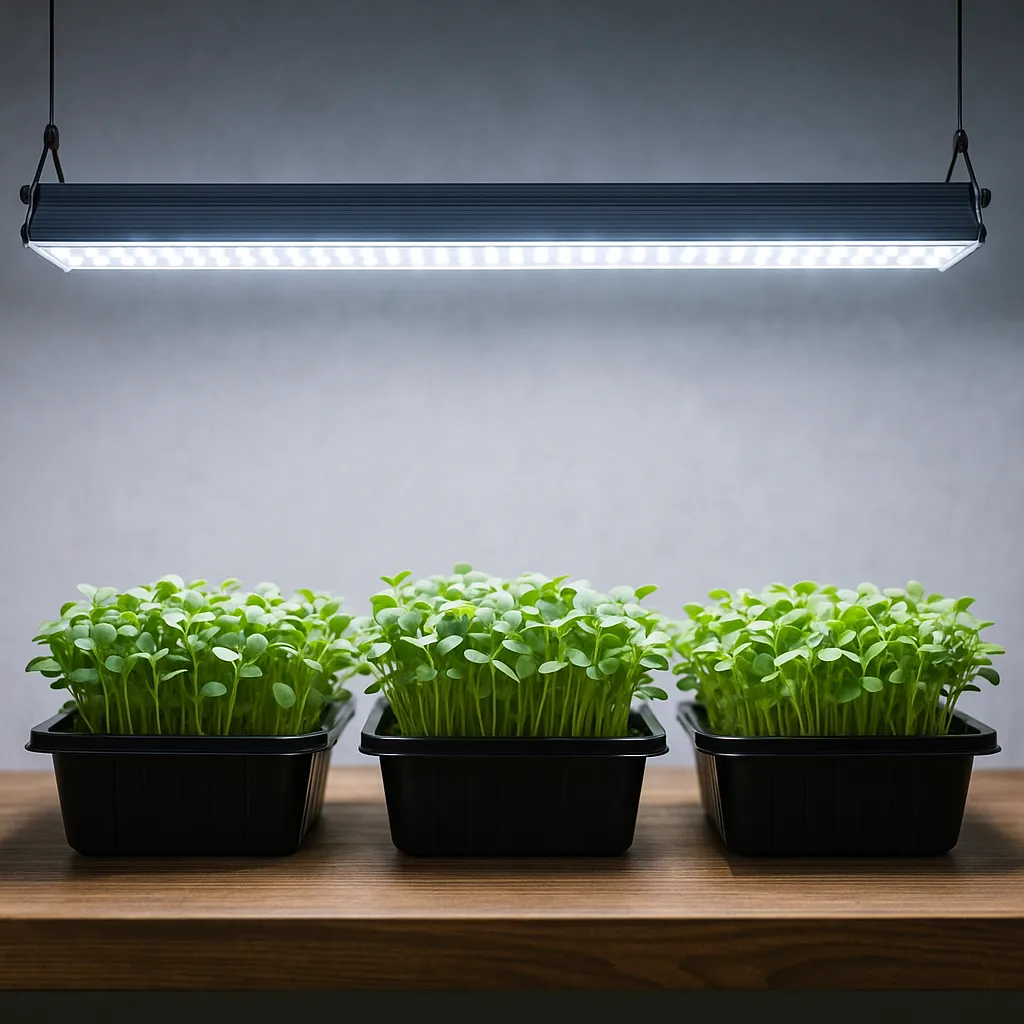
A good indoor growing setup does not need to be complicated. Plants need the right amount of light, a consistent schedule, suitable temperature and moisture, and enough airflow to grow without stretching or staying excessively wet.
This guide explains the basics of using LED grow lights for microgreens, seedlings, herbs, and leafy greens. The same principles apply to all of them, but the ideal intensity, growing time, and container depth can vary with the crop.
1. Why LEDs Work Well for Indoor Growing
Modern LED grow lights are well suited to small indoor growing areas because they can provide useful plant light efficiently without producing the large amount of radiant heat associated with older lighting systems.
- Efficient: modern fixtures can produce substantial plant-usable light for relatively modest electrical power.
- Low radiant heat: LEDs can be positioned closer to plants than many older lamp types, although powerful fixtures can still create heat and excessive intensity.
- Long service life: quality LEDs can operate for many thousands of hours.
- Easy control: timers and dimmers make it simple to maintain consistent lighting.
- Flexible fixtures: LED bars, strips, panels, and boards can be matched to shelves, trays, racks, and larger growing areas.
The important specification is not simply whether a fixture is called a "grow light." What matters is how much useful light reaches the plant canopy and how evenly it is distributed.
2. What Young Plants Actually Need From Light
Seeds contain stored energy and many species do not need light before they germinate. Once shoots emerge, however, seedlings need enough light to develop compact stems and healthy leaves.
Too little light often produces tall, thin plants that lean toward the fixture. Too much intensity can contribute to bleaching, curling, excessive drying, or other stress.
Microgreens are slightly different from transplants such as tomatoes or peppers. Microgreens are harvested very young, usually shortly after the cotyledons open or the first true leaves begin to appear. Vegetable seedlings intended for transplanting must continue growing for weeks and therefore need a setup that can adapt as they become larger.
3. Light Intensity: Understanding PPFD Without the Jargon
Grow-light intensity is commonly described using PPFD - Photosynthetic Photon Flux Density. It tells you approximately how many PAR photons are reaching each square meter of the plant canopy every second.
You do not need to memorize the terminology to use it. Think of PPFD as a measurement of how much plant-usable light is actually arriving at the leaves.
Many young seedlings and microgreens can grow well under moderate PPFD, often roughly in the 100-250 umol/m2/s range depending on crop and growth stage. More demanding or mature plants may require considerably more.
A PAR meter provides the best direct measurement, but plant appearance can also tell you a great deal. Tall, weak seedlings usually need more useful light, while bleaching or stress concentrated on upper leaves may indicate too much intensity.
4. Hanging Height and Coverage
There is no universal grow-light distance such as 8, 12, or 18 inches. Fixture power, optics, beam angle, panel size, and dimmer setting all change the appropriate hanging height.
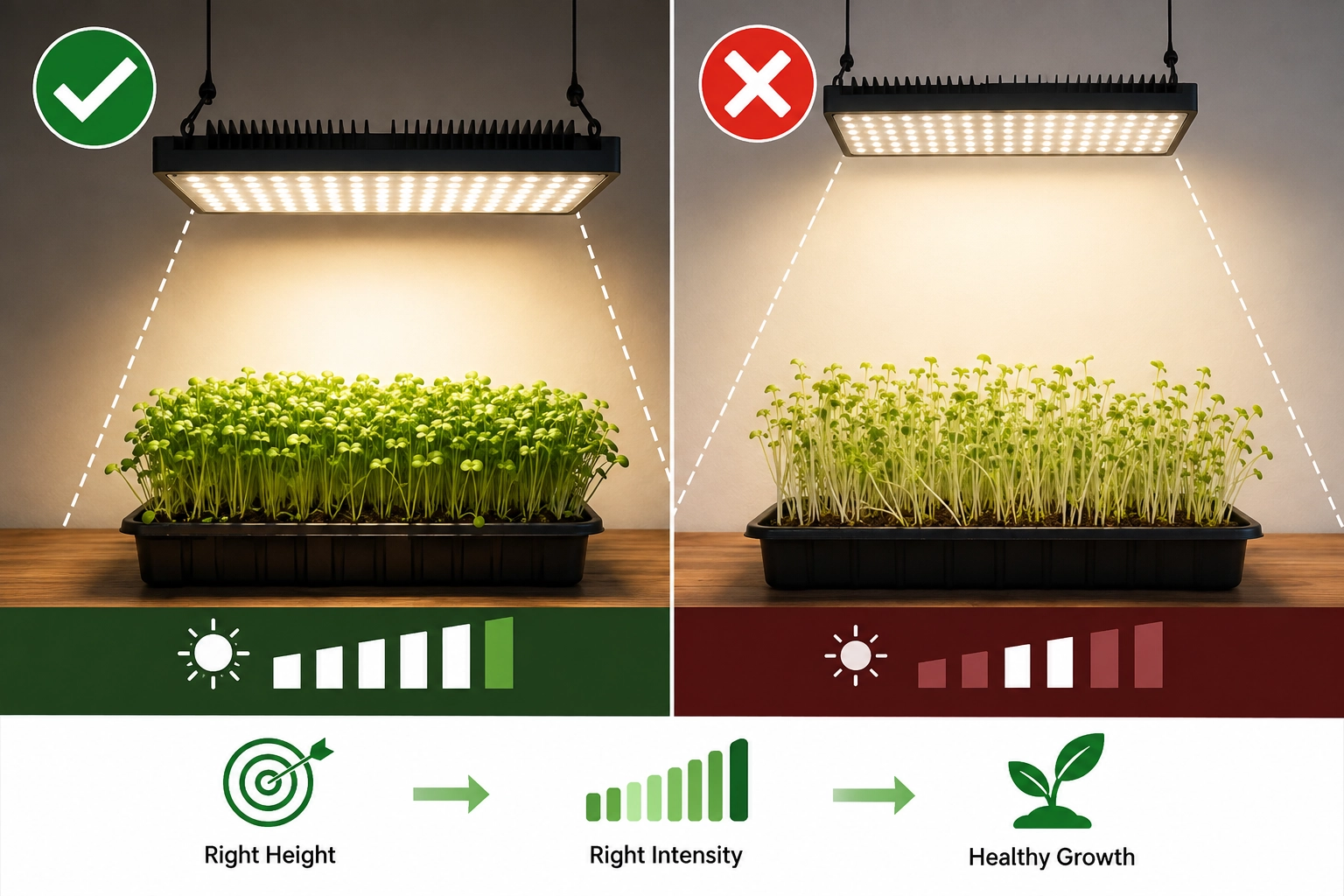
Lowering a fixture usually increases intensity over a smaller area. Raising it usually spreads the light farther but reduces average intensity at the canopy.
- Start with the manufacturer's recommended hanging height when available.
- Center the fixture over the growing area.
- Check the corners as well as the center of the tray.
- Raise or dim the fixture if the upper leaves show light stress.
- Lower or increase output if seedlings consistently stretch toward the light.
With long trays or several trays side by side, even coverage is often more useful than creating an extremely bright hotspot in the center.
5. Photoperiod: How Many Hours of Light?
Indoor growers also control how long plants receive light each day. This period is called the photoperiod.
Many seedlings, herbs, leafy greens, and microgreens are commonly grown under about 14 to 16 hours of light per day, followed by a dark period.
A timer is one of the simplest and most useful pieces of equipment in an indoor grow. It provides consistent day-night timing without relying on someone to switch the lights manually every morning and evening.
Twenty-four-hour lighting is usually unnecessary. Plants generally benefit from a regular light-dark cycle, and running fixtures continuously also wastes electricity when the extra light is not useful.
6. Spectrum and Color: What Matters?
Plants use a broad range of visible wavelengths for photosynthesis. Modern full-spectrum white LEDs can successfully grow seedlings, microgreens, herbs, and many other plants without requiring separate red and blue fixtures.
Blue wavelengths can influence compact growth, while red wavelengths are highly useful for photosynthesis, but indoor growers do not usually need to chase one exact wavelength or color temperature.
A balanced full-spectrum fixture makes the plants easier to inspect and usually provides a practical spectrum across multiple growth stages.
Color temperature - such as 4000K or 5000K - describes the visual appearance of white light. It is useful when comparing fixtures, but it does not tell you the full plant-growth spectrum or intensity by itself.
7. Temperature, Humidity, and Air Movement
Lighting is only one part of indoor growing. Temperature, humidity, and airflow influence germination, water use, disease pressure, and plant structure.
- Keep the growing area within a comfortable temperature range for the crop you are growing.
- Warm-season seeds such as tomatoes and peppers often germinate faster in warm growing media.
- Remove humidity covers after seedlings emerge rather than keeping plants enclosed in persistently damp air.
- Use gentle air movement to prevent stagnant humid pockets.
- Avoid blasting young seedlings directly with a strong fan.
Many microgreens grow comfortably around normal indoor temperatures. Extremely warm, wet, stagnant conditions increase the risk of mold and damping-off.
8. Watering Under LED Lights
Indoor trays dry differently depending on fixture intensity, airflow, temperature, container size, and growing medium. Do not water purely by a fixed schedule.
- Keep newly sown media evenly moist during germination.
- Avoid leaving trays continuously waterlogged.
- Bottom watering can help keep foliage and stems drier once seedlings are established.
- Allow excess water to drain.
- Check trays more frequently when light intensity, temperature, or airflow increases.
More light can increase water use, so a setup that worked when seedlings were tiny may need more frequent checking as the canopy develops.
9. When and How to Adjust the Lights
Plants are useful indicators of whether your current setup is working. Make small adjustments rather than changing height, brightness, watering, and fertilizer all at once.
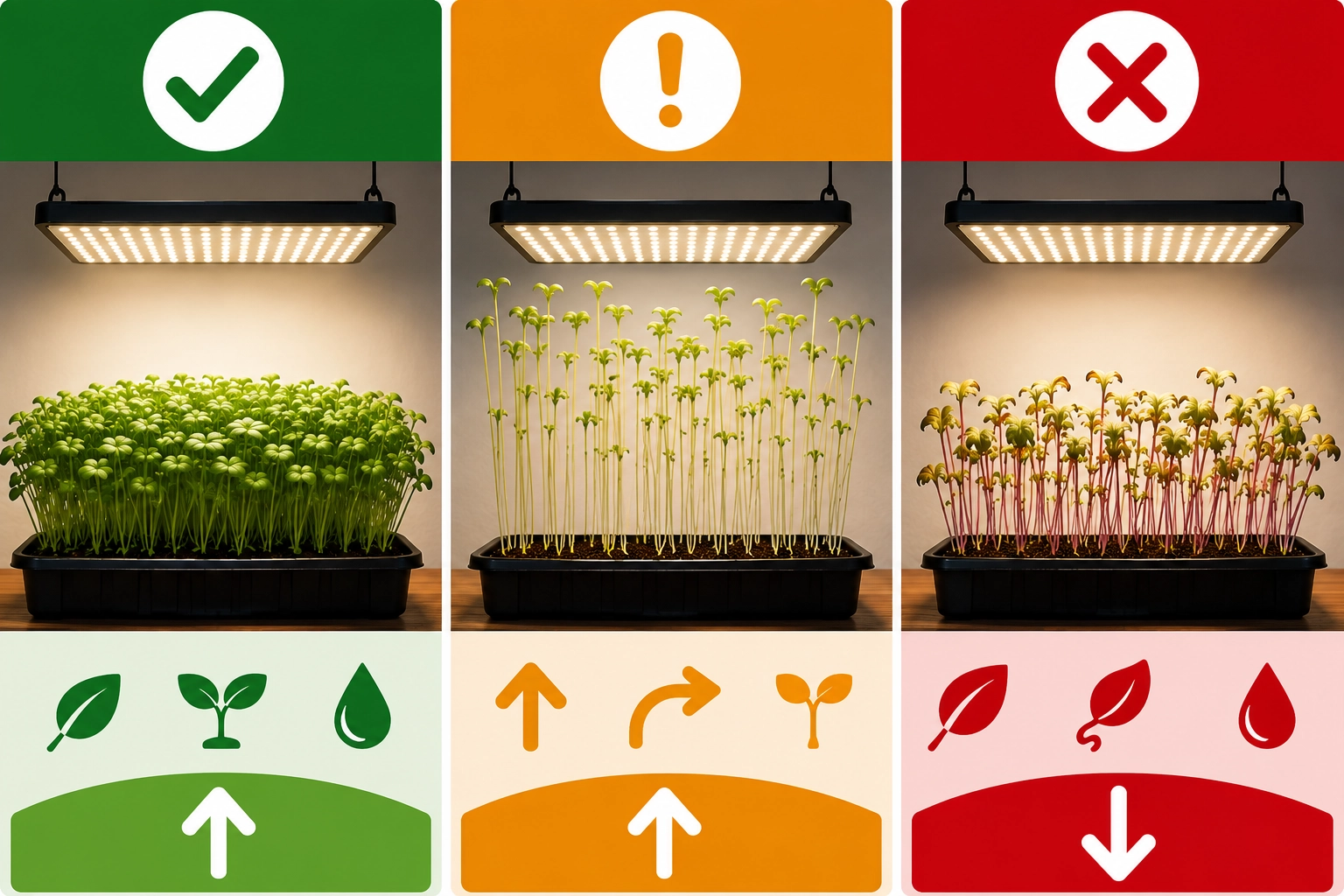
- Tall, thin seedlings: increase useful light by lowering the fixture or increasing output when appropriate.
- Plants leaning toward one side: improve fixture alignment or rotate the tray.
- Bleached or stressed upper leaves: raise or dim the light and check heat and moisture.
- Uneven growth: compare light levels across the entire tray.
- Healthy compact growth: leave the setup alone unless the plants are growing into the fixture.
As plants grow taller, raise the fixture as needed to maintain a suitable distance and coverage pattern.
10. Microgreens and Seedlings Are Not Quite the Same
Microgreens and transplant seedlings share the same basic need for light, water, temperature, and airflow, but their goals are different.
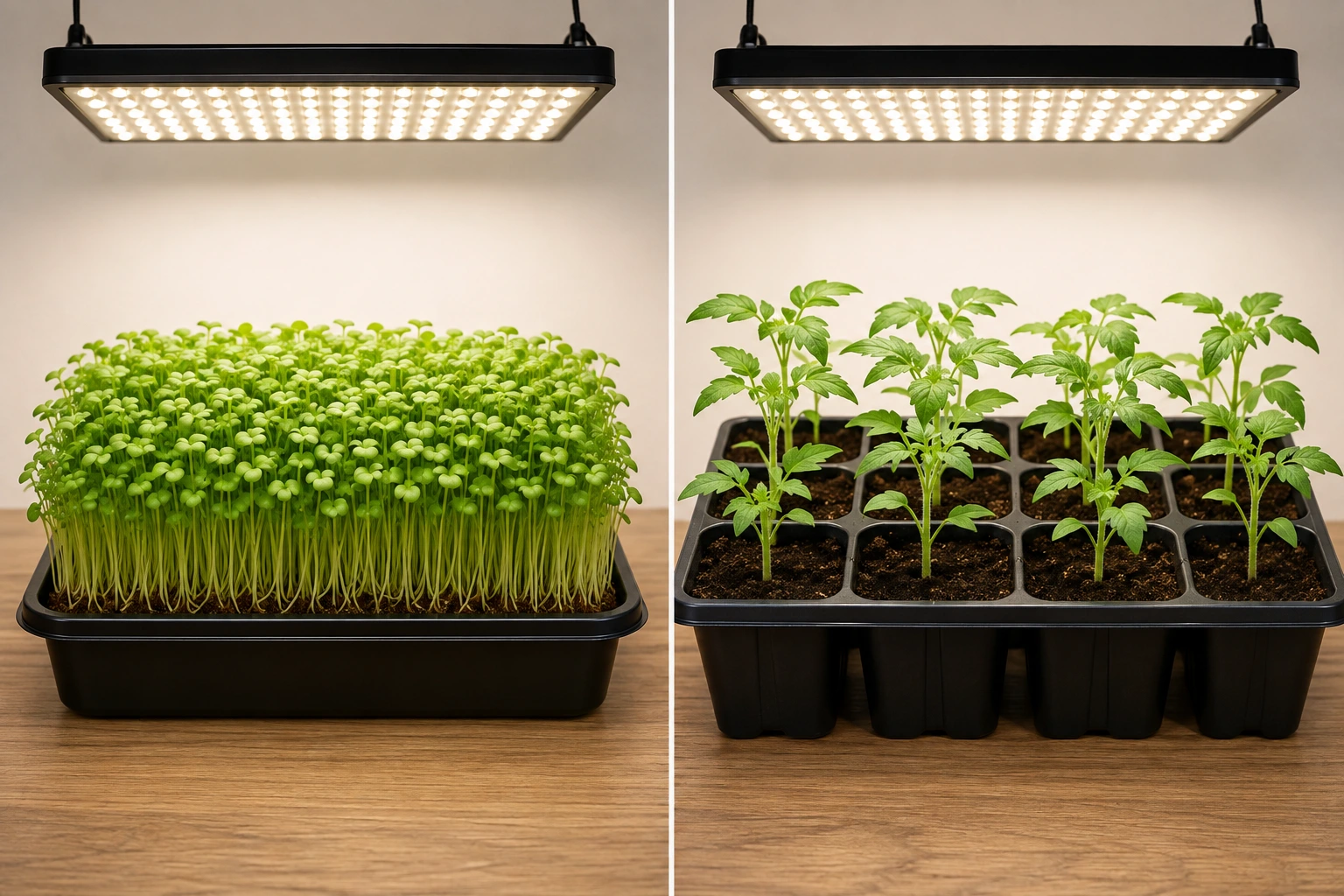
Microgreens
- Usually grown densely in shallow trays.
- Harvested while very young.
- Often ready within roughly one to three weeks depending on the crop.
- Usually do not require much fertilizer when grown in fresh media.
Vegetable or Herb Seedlings
- Usually spaced farther apart.
- Remain under lights for much longer.
- May eventually need larger containers.
- Often require nutrition after stored seed reserves and starter-mix nutrients are depleted.
Keep that distinction in mind when adapting microgreen advice to tomatoes, peppers, herbs, flowers, or other plants intended for transplanting.
11. A Simple Indoor Growing Setup
- Choose the crop. Decide whether you are growing microgreens, seedlings, herbs, or leafy greens.
- Select suitable trays or containers. Use clean containers with appropriate drainage.
- Add fresh growing medium. Use a light, well-drained seed-starting mix or another medium suitable for your crop.
- Sow the seeds. Follow crop-specific depth and spacing recommendations.
- Maintain moisture during germination. Keep the medium evenly moist without creating standing water.
- Add light after emergence. Position the LED according to the fixture output and plant response.
- Set a timer. A 14-16 hour photoperiod is a common starting point for many young plants.
- Add gentle airflow. Use enough circulation to prevent stagnant air without excessively drying seedlings.
- Observe before adjusting. Look for stretching, discoloration, uneven growth, or excessive drying.
- Raise the light as plants grow. Maintain useful coverage without allowing foliage to grow into the fixture.
12. Useful Equipment for Indoor Growing
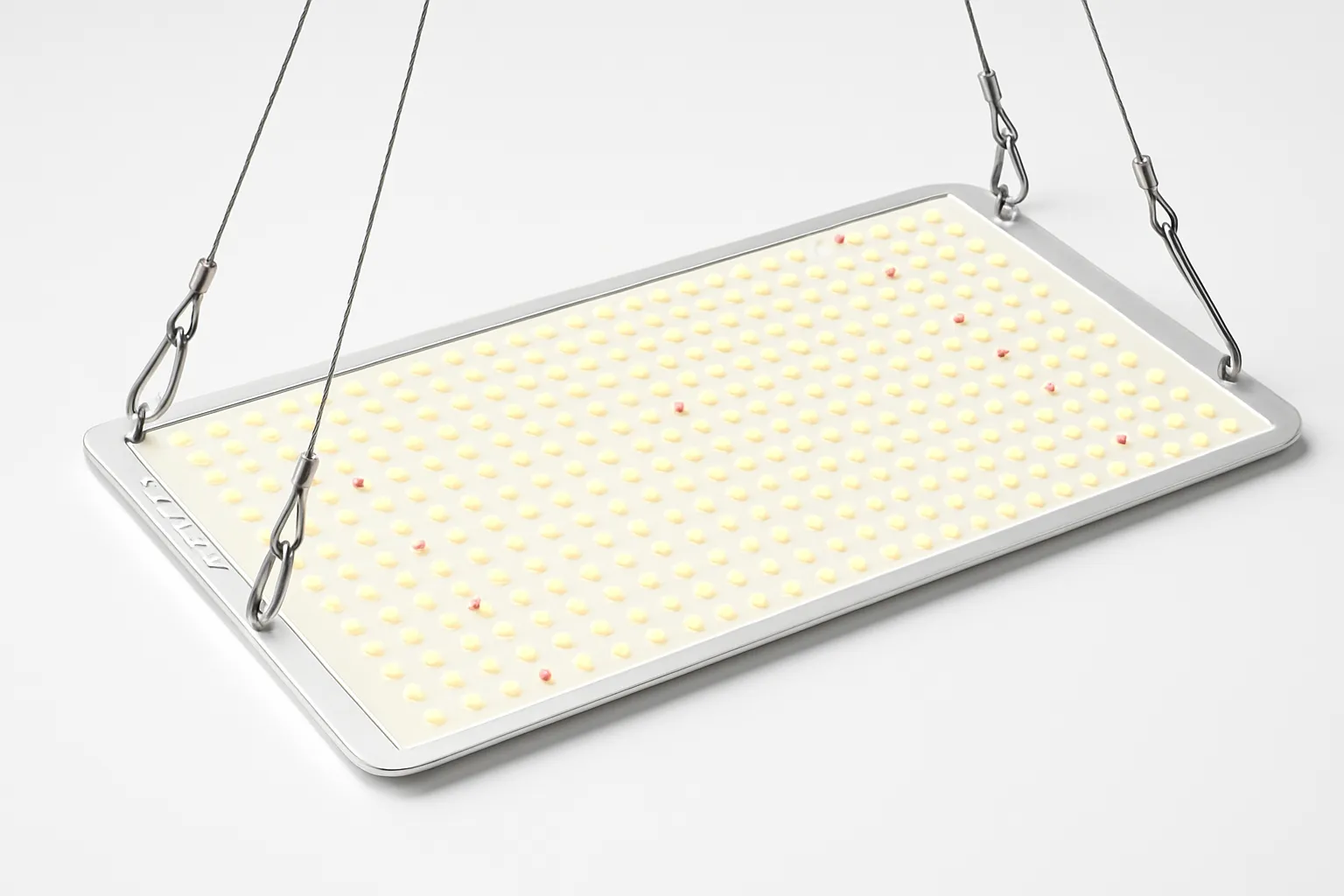
Look for a fixture with enough output and coverage for your growing area, preferably with dimming or adjustable hanging height. Published PPF or PPFD information is more useful than vague "equivalent wattage" claims.
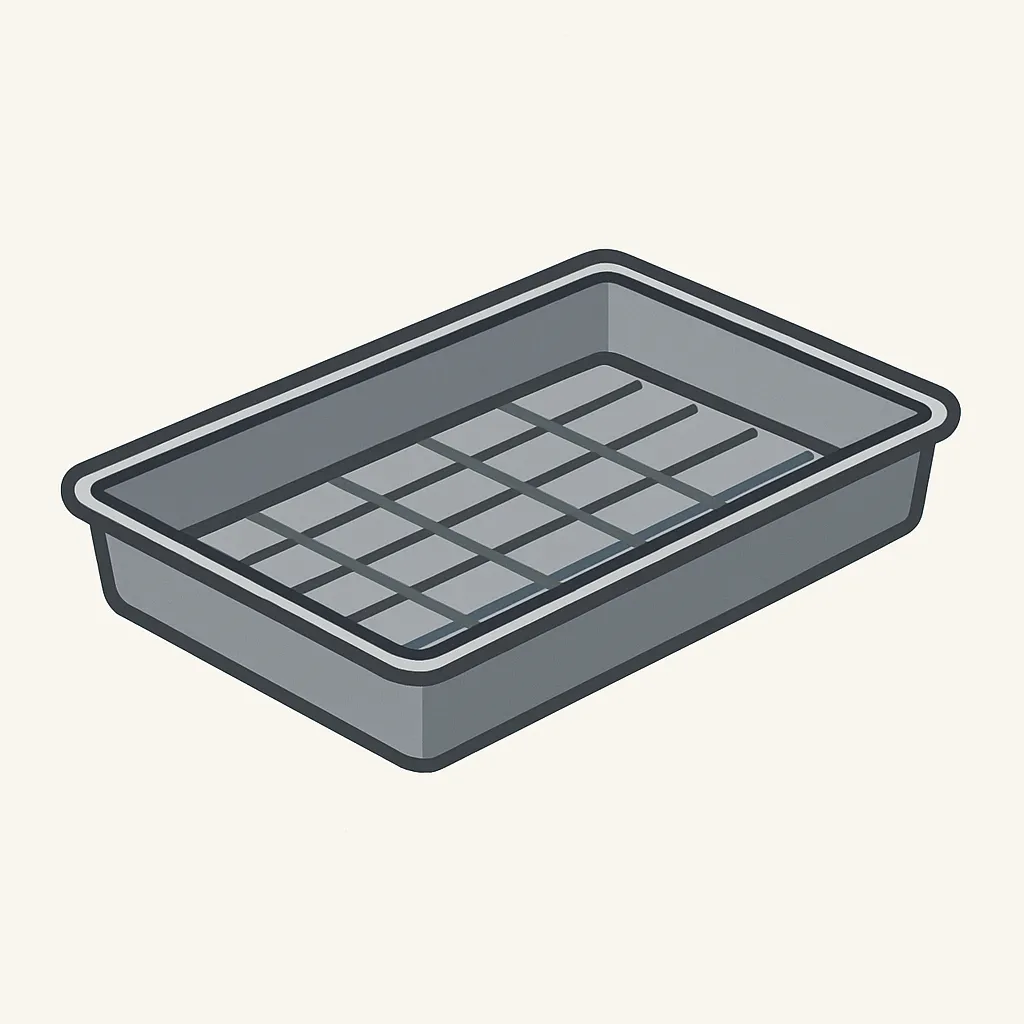
Shallow trays are convenient for microgreens, while seedlings intended for transplanting may need deeper cells or pots. Use durable trays that can be cleaned between crops.
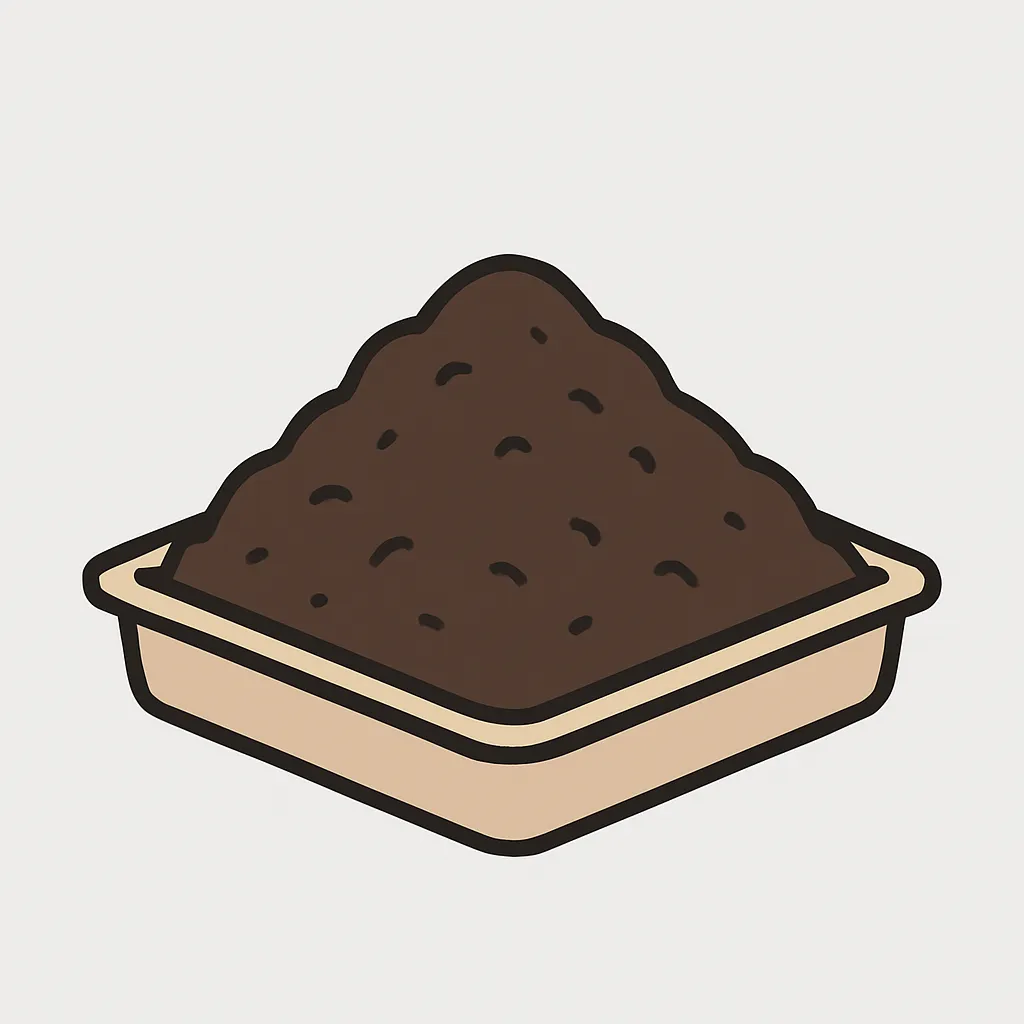
A light seed-starting mix provides good moisture retention while still allowing drainage and air around young roots. Coconut coir and other soilless media can also work when managed appropriately.
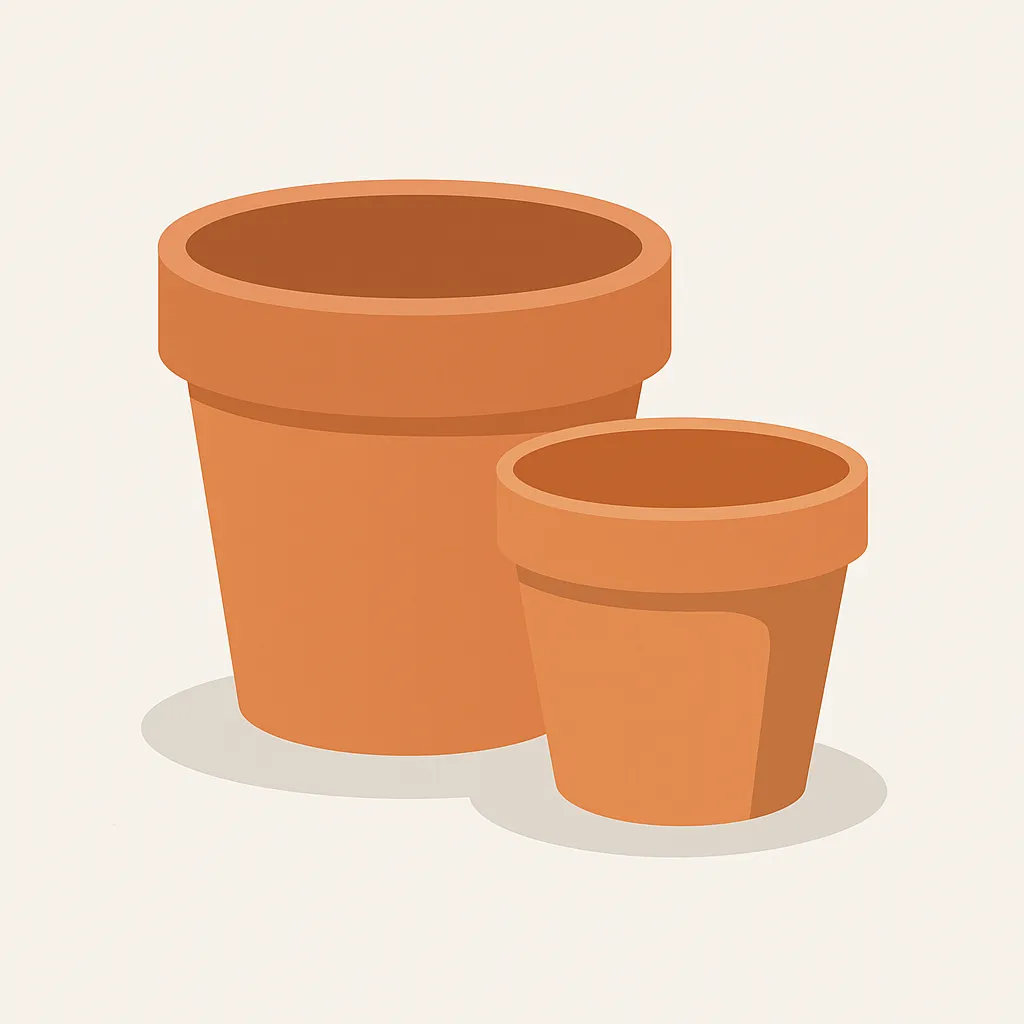
Deeper containers are useful for herbs and seedlings that will remain indoors longer. Make sure excess water can drain and that containers are easy to clean.
Many microgreens need little or no supplemental fertilizer when grown in fresh media. Longer-lived seedlings and hydroponic crops may require appropriately diluted nutrients as they develop.
Automates the daily photoperiod and keeps lighting consistent. A simple digital or mechanical timer is sufficient for most small setups.
Useful for crops that need warmer media during germination, especially in cool rooms. A thermostat provides better control than running a heat mat continuously at full output.
Gentle air movement reduces stagnant humidity and can help strengthen developing stems. Aim for mild circulation rather than constant strong wind.
Air filtration is optional for most home growing setups. It can be useful in dusty rooms or enclosed spaces, but good sanitation, ventilation, and moisture control are usually more important for preventing seedling problems.
LEDHost Tip
Do not chase one perfect hanging height. Use fixture specifications as a starting point, then watch the plants. Compact healthy growth usually means the light is close to where it needs to be; stretching or upper-leaf stress tells you it is time to adjust.
More in the Plant Zone
Frequently Asked Questions
Ask a Question
All questions are reviewed before publishing.