
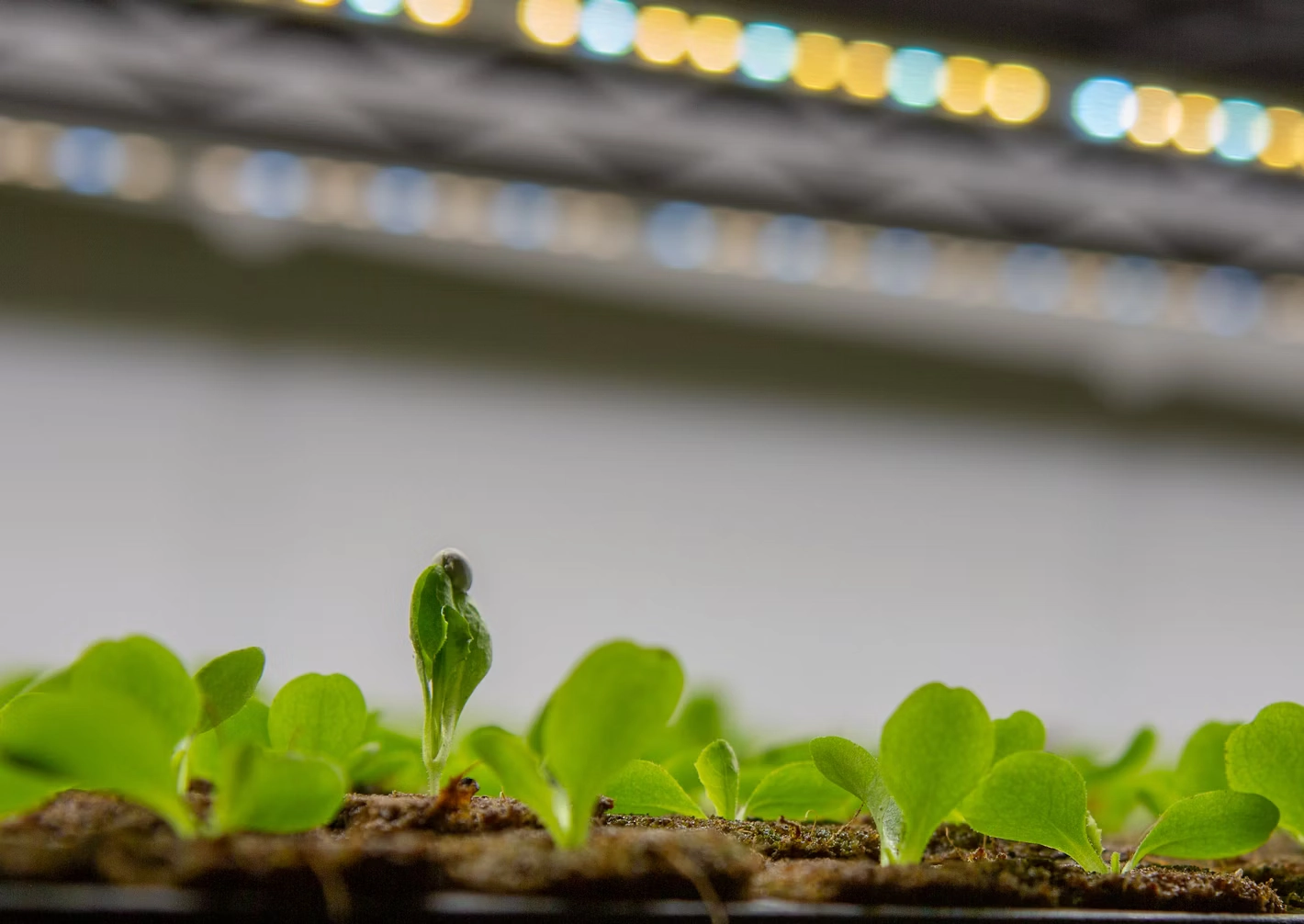
Starting seeds indoors under LED lights gives you control over one of the most important parts of early plant growth: light. The goal isn't maximum brightness. It's steady, appropriate light that produces short, sturdy seedlings instead of pale, stretched growth.
Germination and seedling growth are two different stages. Seeds need the right moisture, temperature, air, and planting conditions to germinate. Once seedlings emerge, however, adequate light becomes essential.
1. Before the Seeds Sprout
Light requirements during germination vary by plant. Many seeds germinate well without light, while some species need light and others germinate better when covered. Follow the planting depth and germination instructions for the particular seed you're growing.
At this stage, consistent moisture and temperature are usually more important than the grow light. Use a clean seed-starting mix that stays moist without becoming waterlogged. A humidity dome can help retain moisture while seeds germinate.
Warm-season crops such as tomatoes, peppers, and eggplants often benefit from bottom heat. A thermostatically controlled seedling heat mat is useful when the growing area is cool. Once seedlings have emerged, remove the humidity dome and, in most situations, discontinue the extra bottom heat.
2. Once Seedlings Emerge: Give Them Light
As soon as seedlings emerge, move them into bright, consistent light. Inadequate light is one of the most common reasons indoor seedlings become tall, thin, and weak - the familiar "leggy" seedling.
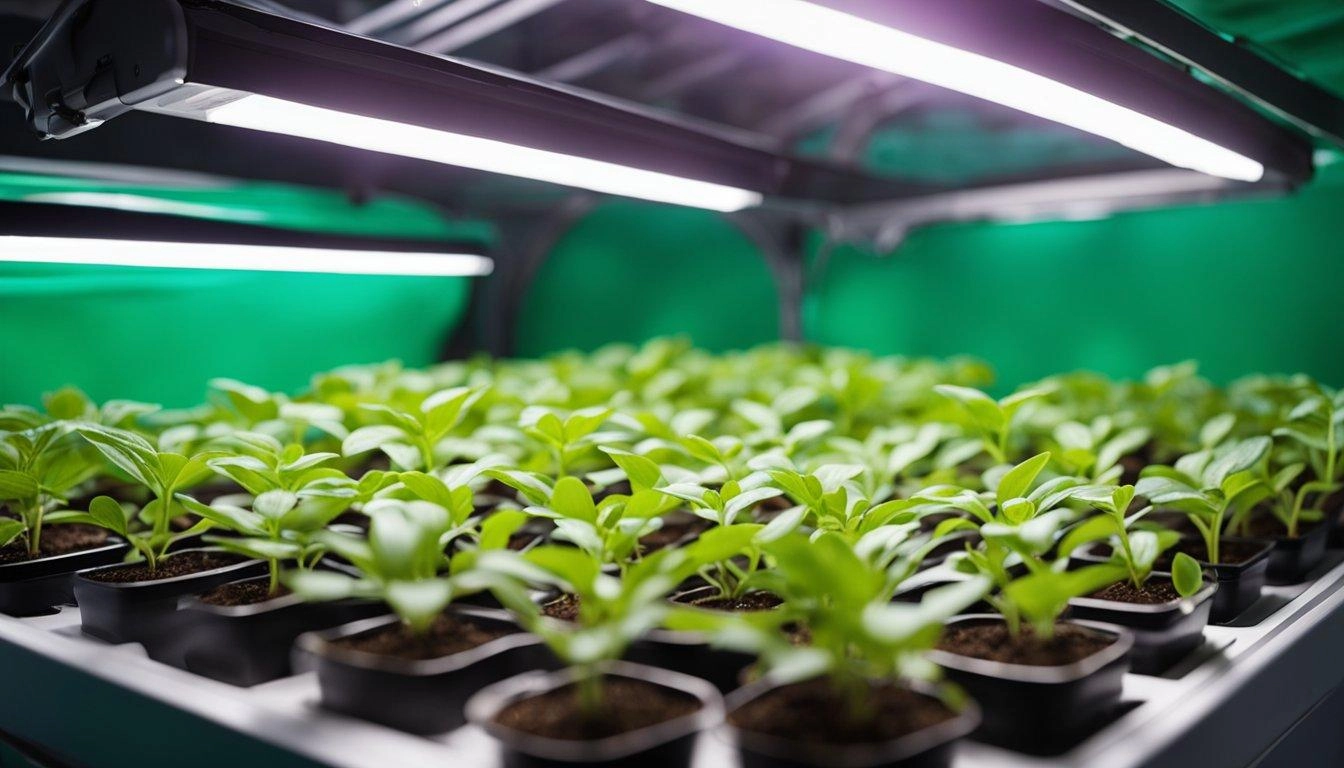
Full-spectrum white LEDs are an excellent general-purpose choice for seed starting. Blue and red wavelengths both contribute to plant growth, so there's no need to rely on a blue-only fixture. A balanced LED grow light can carry seedlings from emergence through the point when they're ready to move outdoors.
- Photoperiod: Aim for about 14-16 hours of light each day for most seedlings, followed by a dark period.
- Intensity: Seedlings need useful light, but they don't need the intensity required by mature flowering or fruiting plants.
- Consistency: Put the lights on a timer so seedlings receive the same light cycle every day.
3. How Close Should LED Lights Be to Seedlings?
There is no single correct hanging height for every LED grow light. A low-power LED strip may need to be only a few inches above the seedlings, while a powerful grow panel may need considerably more distance.
For typical seed-starting fixtures, keeping the light fairly close to the canopy helps prevent stretching. Raise the fixture as the seedlings grow. If the manufacturer provides a seedling or propagation height, use that as your starting point.
An even better approach is to judge the light reaching the plants rather than relying on distance alone. If your fixture provides PPFD information, use it to compare intensity at different heights. You can also use our PAR simulator to better understand how fixture height and coverage affect the growing area.
4. A Simple LED Seed-Starting Setup
- Start with clean trays and seed-starting mix. Use containers with drainage and moisten the mix before planting.
- Plant according to the seed packet. Planting depth, temperature, and whether the seed should be covered can vary considerably by species.
- Maintain moisture during germination. Keep the mix evenly moist, not saturated. A vented humidity dome can reduce moisture loss until seedlings emerge.
- Add bottom heat when appropriate. Warm-season crops can germinate faster and more reliably with a thermostatically controlled heat mat.
- Move emerging seedlings immediately under the LEDs. Don't wait for them to stretch toward a window before providing adequate light.
- Use a timer. A regular daily light and dark cycle removes guesswork and keeps growth consistent.
- Raise the lights as plants grow. Maintain appropriate intensity at the tops of the seedlings rather than leaving the fixture at one fixed height.
5. Let the Seedlings Tell You What They Need
Seedlings give you useful clues when the setup isn't quite right.
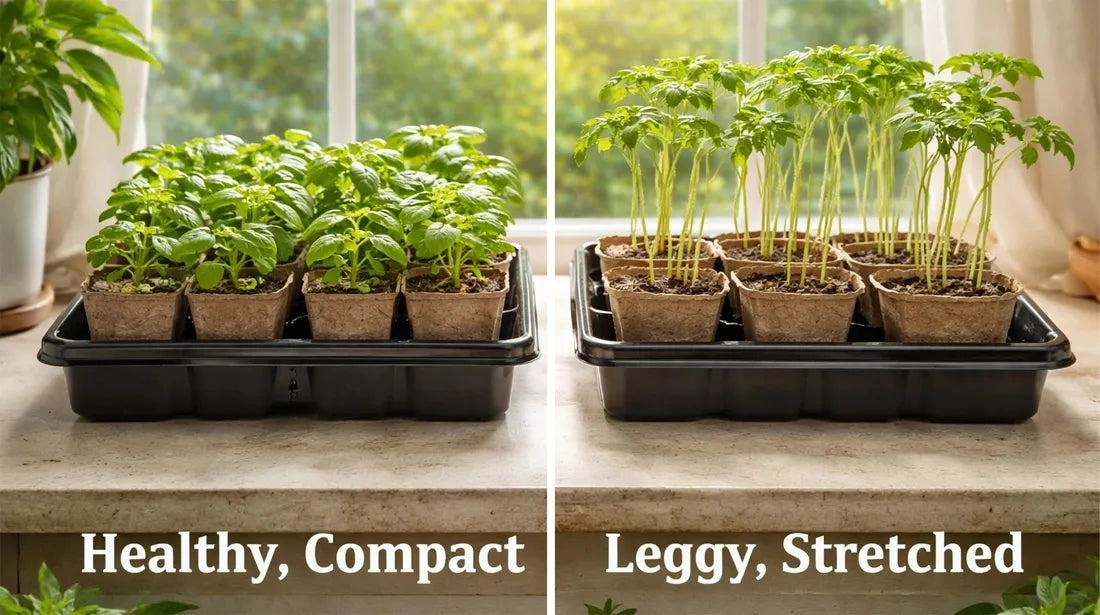
- Tall, thin, leaning seedlings: Usually a sign that light is too weak or too far away.
- Pale growth: Can indicate inadequate light, although watering, nutrition, temperature, and root problems can also be involved.
- Drying or stressed upper leaves: Check whether a powerful fixture is too close and whether the growing mix is drying too quickly.
- Mold or constantly wet mix: Reduce excess moisture and improve air circulation. Remove the humidity dome after germination.
Healthy seedlings are generally compact, sturdy, and evenly green. If they're stretching rapidly toward the light, correct the lighting early - it's much easier to prevent leggy growth than to undo it later.
More in the Plant Zone
Frequently Asked Questions
Ask a Question
All questions are reviewed before publishing.
LEDHost Tip
Good seedling lighting isn't about using the most powerful fixture. It's about providing enough light, at the right distance, consistently. Compact, sturdy growth is a better guide than wattage alone.